
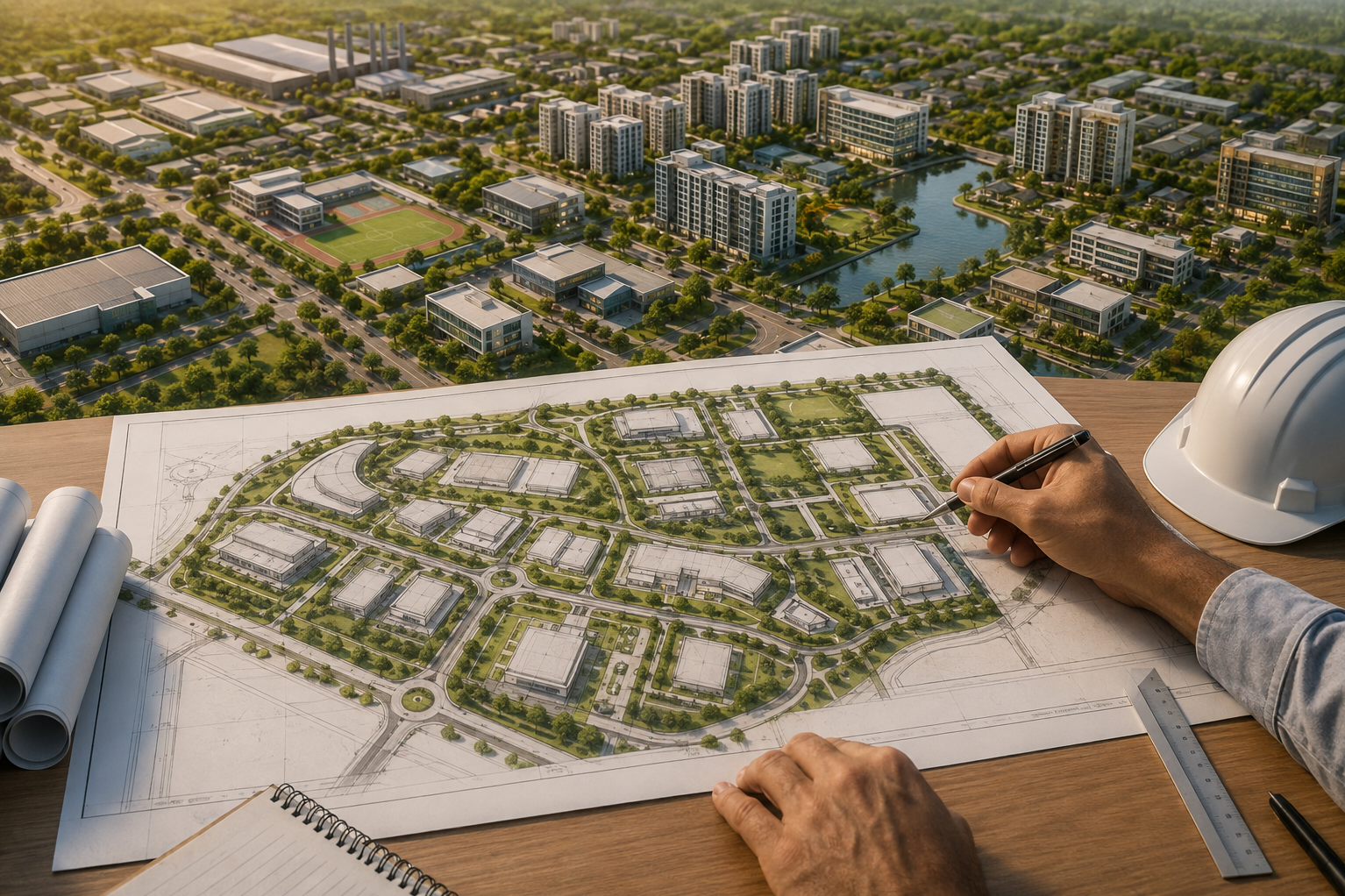
Large-scale developments require much more than attractive building designs. Whether planning a residential township, an educational campus, an industrial facility, or a mixed-use commercial project, master planning services provide the strategic framework that guides the entire development. A well-prepared master plan ensures that every element of the project works together efficiently while allowing room for future growth.
In Gadchiroli, infrastructure development and planned construction projects are creating opportunities for developers, institutions, and organizations to adopt a more systematic approach to land utilization. Investing in professional master planning at the beginning of a project helps avoid costly redesigns and supports long-term functionality.
What Are Master Planning Services?
Master planning is the process of organizing land, infrastructure, buildings, circulation, utilities, and open spaces into a cohesive development plan. Instead of focusing on a single structure, it considers how every component of the site interacts with the others.
A comprehensive master plan typically includes:
- Land use planning
- Building placement
- Road and circulation networks
- Parking layouts
- Landscape planning
- Utility infrastructure
- Stormwater drainage
- Public and recreational spaces
- Future expansion zones
- Environmental considerations
The objective is to create a development that functions efficiently today while remaining adaptable for future needs.
Why Master Planning Is Essential Before Construction
Beginning construction without an overall site strategy can lead to poor space utilization, traffic congestion, utility conflicts, and expensive modifications later.
Professional master planning helps:
- Maximize land efficiency
- Improve accessibility
- Reduce construction conflicts
- Support phased development
- Enhance safety and movement
- Improve project coordination
- Simplify infrastructure planning
These benefits contribute to smoother project execution from the very beginning.
Supporting Different Types of Developments
Master planning is valuable across a wide range of projects because every site has unique requirements.
Common applications include:
- Residential layouts
- Commercial complexes
- Educational institutions
- Healthcare facilities
- Hospitality projects
- Industrial developments
- Corporate campuses
- Government infrastructure
Each project demands careful analysis of user movement, service requirements, and long-term operational efficiency.
Efficient Land Utilization Improves Project Value
Land is one of the most valuable resources in any development project. Effective master planning ensures that available space is used wisely without creating overcrowded or underutilized areas.
Good planning considers:
- Building orientation
- Open space allocation
- Road widths
- Parking capacity
- Green areas
- Service zones
- Utility corridors
Balancing these elements creates developments that are functional as well as visually appealing.
Infrastructure Planning Should Never Be an Afterthought
Infrastructure supports every aspect of a successful development. Poor planning can result in recurring operational problems long after construction is complete.
Key infrastructure components include:
- Water supply systems
- Electrical distribution
- Sewerage networks
- Stormwater drainage
- Fire safety access
- Waste management
- Communication services
Coordinating these systems during the planning stage reduces future disruptions and maintenance challenges.
Preparing for Future Expansion
One of the major advantages of master planning is its ability to accommodate future growth.
Projects often evolve over time through:
- Additional buildings
- Increased occupancy
- Expanded parking
- New amenities
- Infrastructure upgrades
- Technological improvements
A flexible master plan allows these changes to occur without disrupting existing operations.
Common Mistakes Without a Master Plan
Projects that move directly into construction without proper site planning often face avoidable challenges.
Some common issues include:
- Inefficient traffic circulation.
- Poor parking management.
- Inadequate drainage systems.
- Utility conflicts during construction.
- Limited scope for future expansion.
- Uneven distribution of open spaces.
- Higher long-term maintenance costs.
A structured planning process helps identify and resolve these concerns before construction begins.
The Importance of an Integrated Planning Approach
Master planning is most effective when architects, engineers, landscape designers, and construction professionals work together from the earliest stages of the project. This collaborative process improves coordination and reduces the likelihood of design conflicts during execution.
Many developers and property owners in Gadchiroli now prefer firms that provide integrated planning and project development services. MB Design and Build approaches master planning with a multidisciplinary perspective, aligning architectural concepts, infrastructure planning, and construction requirements to create practical, future-ready developments.
A well-prepared master plan serves as the foundation for successful projects of every scale. By organizing land, infrastructure, and building layouts with long-term goals in mind, property owners can create developments that remain efficient, adaptable, and valuable for many years.